100% Canadian Owned & Operated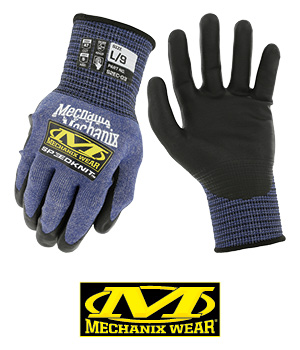





Model:
Your Model No.:
Mfr. No.:


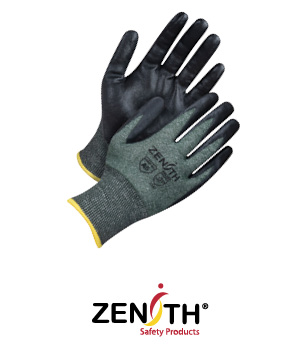
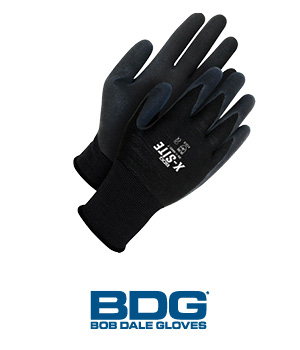
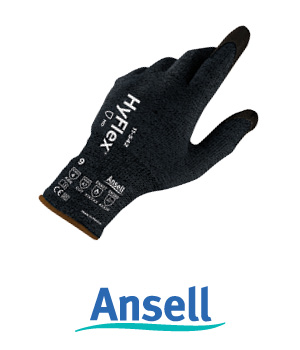
Choosing the appropriate protective gloves is vital when working with sharp tools or materials that pose potential risks. Cut-resistant gloves are specifically designed to safeguard your hands while ensuring comfort and functionality. This guide will break down key glove standards and help you select the ideal cut-resistant gloves from leading brands, Mechanix Wear®, Zenith Safety Products®, Bob Dale Gloves®, and Ansell, for your unique work environment.

Two standards are most commonly used when rating the safety of a cut-resistant glove. The first is the American and International standard ANSI/ISEA 105. The second is the European standard EN 388, often used in Canada. Both of these standards test for cut, abrasion, and puncture resistance.
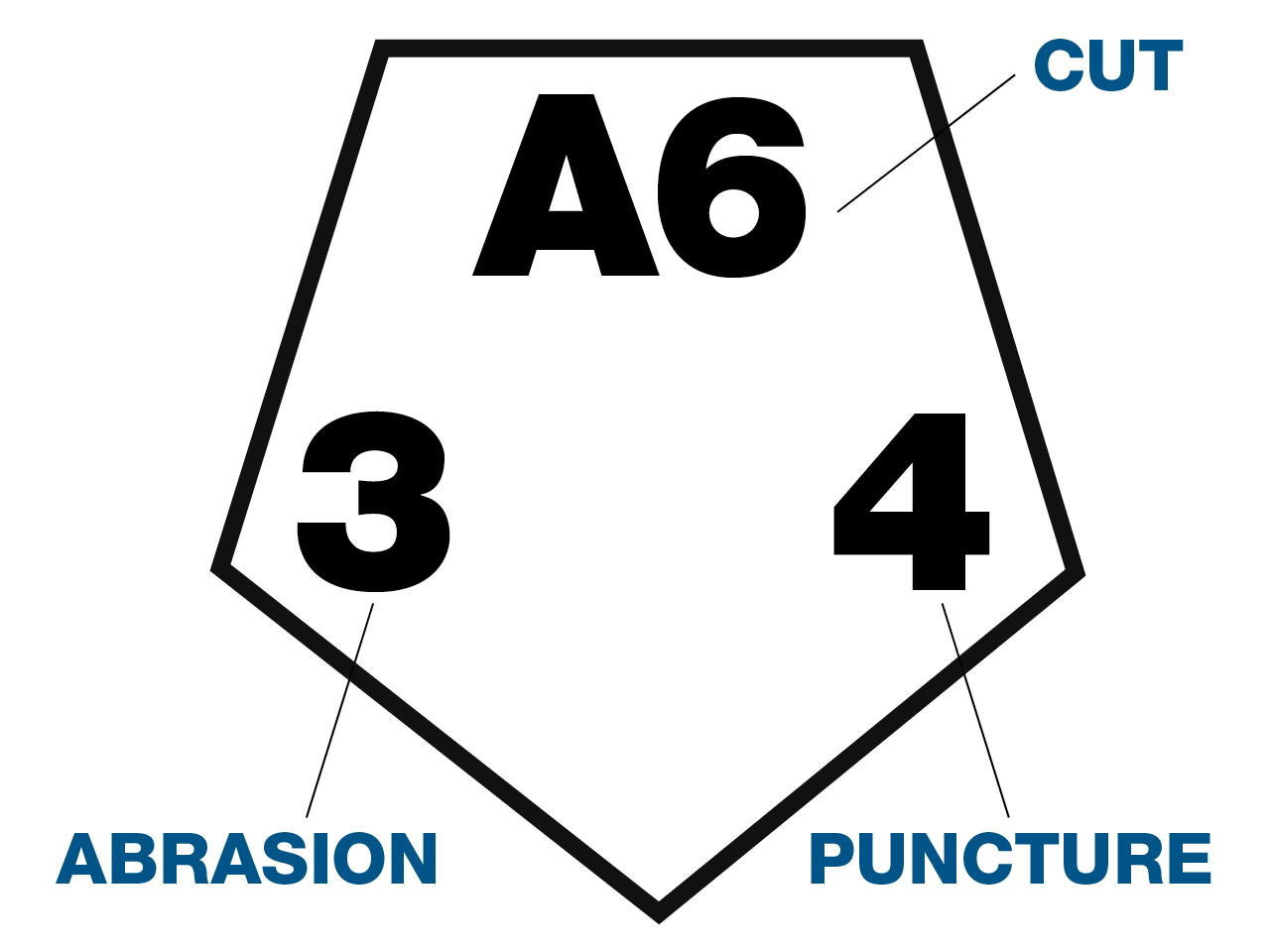
Using a razor blade, the ANSI/ISEA 105 standard tests for the weight in grams needed to cut through the glove material. Different loads are placed on the blade as it moves linearly. The weight range required to cut through the liner is assigned a cut level between A1 and A9.
The ANSI/ISEA 105 icon also shows puncture and abrasion resistance ratings. A weighted abrasive wheel tests how well a material resists wear. It counts the number of revolutions (rotations) before there is a hole in the liner. Find the abrasion test results, on a scale from 0 to 6, in the left corner of the icon.
A probing method measures, on a 1 to 5 scale, how well a material resists punctures in Newtons. Find the puncture resistance level in the right corner of the ANSI/ISEA 105 icon.
| LEVEL | CUT-RESISTANCE |
|---|---|
| A1 | 200 - 499 grams |
| A2 | 500 - 999 grams |
| A3 | 1,000 - 1,499 grams |
| A4 | 1,500 - 2,199 grams |
| A5 | 2,200 - 2,999 grams |
| A6 | 3,000 - 3,999 grams |
| A7 | 4,000 - 4,999 grams |
| A8 | 5,000 - 5,999 grams |
| A9 | 6,000+ grams |
| LEVEL | ABRASION-RESISTANCE |
|---|---|
| 500 GRAM LOAD | |
| 0 | 0 - 99 revolutions |
| 1 | 100 - 499 revolutions |
| 2 | 500 - 999 revolutions |
| 3 | 1,000 - 2,999 revolutions |
| 1,000 GRAM LOAD | |
| 4 | 3,000 - 9,999 revolutions |
| 5 | 10,000 - 19,999 revolutions |
| 6 | 20,000+ revolutions |
| LEVEL | PUNCTURE-RESISTANCE |
|---|---|
| 1 | 0 - 19 Newtons |
| 2 | 20 - 59 Newtons |
| 3 | 60 - 99 Newtons |
| 4 | 100 - 149 Newtons |
| 5 | 150+ Newtons |
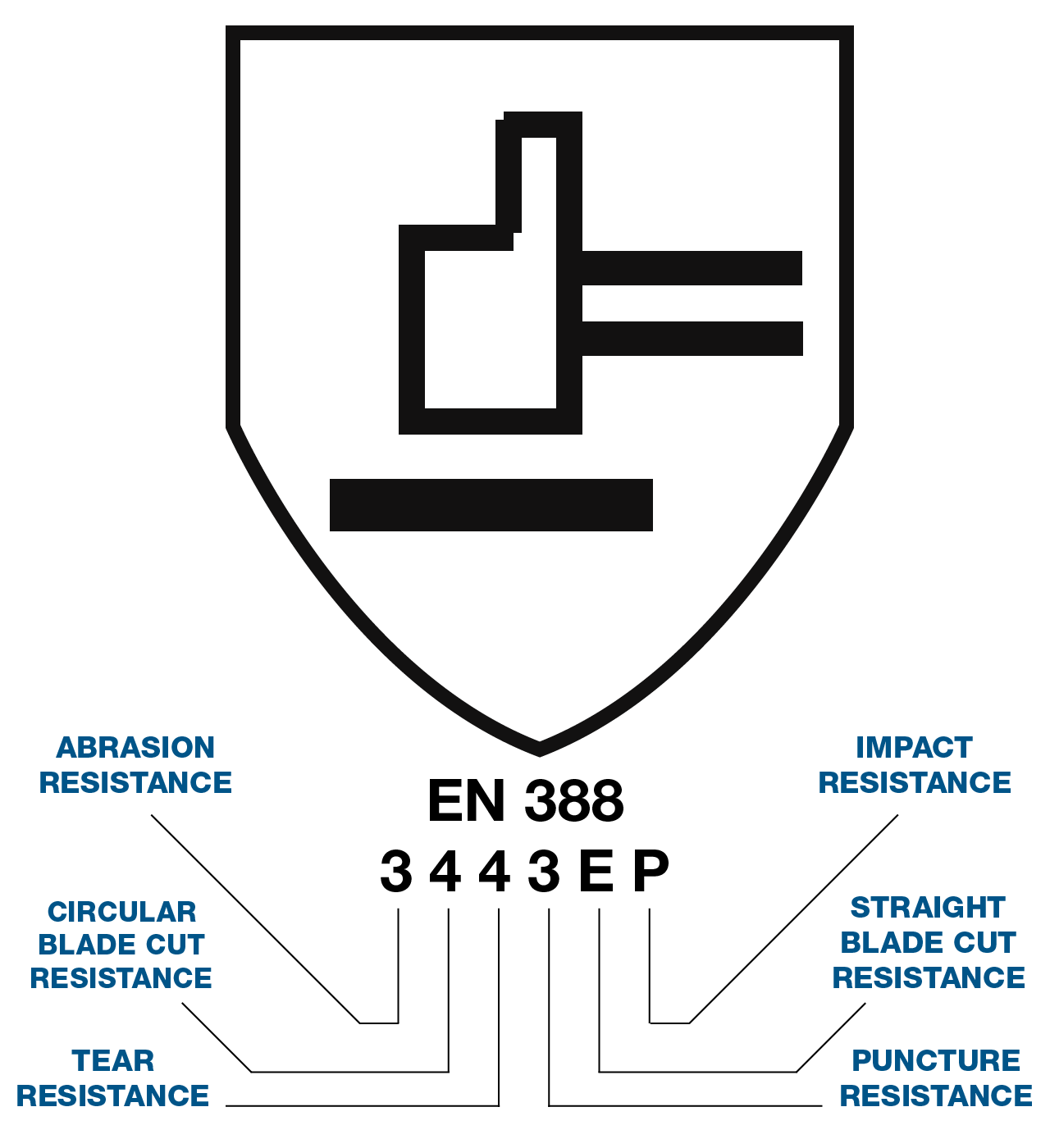
Using a circular blade under a fixed load, the EN 388 standard measures the number of blade rotations needed to cut through the glove material. This is the coupe test and the cut level results range between 1‑5.
The EN 388 standard also tests cut resistance using the TDM 100 machine, which uses a straight blade like the ANSI/ISEA 105 test. The results, measured in Newtons, range on a scale from A to F.
The EN 388 icon on a glove also informs you of the abrasion, puncture, tear, and impact resistance levels. The abrasion and puncture tests are similar to those performed for the ANSI/ISEA 105 standard, but are on a 1-4 scale. The tear resistance test, which also uses a 1-4 scale, measures how likely the glove is to rip during use. Finally, the impact resistance test has three possible ratings: P for passed, F for failed, and X (or blank) for not tested.
| LEVEL | CUT-RESISTANCE (COUPE TEST) |
|---|---|
| 1 | 200 - 499 grams |
| 2 | 500 - 999 grams |
| 3 | 1,000 - 1,499 grams |
| 4 | 1,500 - 3,499 grams |
| 5 | 3,500 - 7,000 grams |
| LEVEL | CUT-RESISTANCE (TDM 100 TEST) |
|---|---|
| A | 2 Newtons |
| B | 5 Newtons |
| C | 10 Newtons |
| D | 15 Newtons |
| E | 22 Newtons |
| F | 30 Newtons |
| LEVEL | ABRASION-RESISTANCE (435 GRAM LOAD) |
TEAR-RESISTANCE | PUNCTURE-RESISTANCE |
|---|---|---|---|
| 1 | 0 - 99 revolutions | 10 Newtons | 0 - 20 Newtons |
| 2 | 100 - 499 revolutions | 25 Newtons | 21 - 59 Newtons |
| 3 | 500 - 1,999 revolutions | 50 Newtons | 60 - 99 Newtons |
| 4 | 2,000 - 8,000 revolutions | 75 Newtons | 100+ Newtons |
When selecting a pair of cut-resistant gloves, it's important to evaluate the level of mechanical protection needed. Are you assembling materials with sharp edges, which would require a higher level of cut protection? Do you work in shipping and receiving, which requires gloves with lower cut ratings?
Here are the standard ratings regarding different industries:
| ANSI/ISEA 105 | EN 388 (COUPE TEST) | EN 388 (TDM 100 TEST) | INDUSTRY |
|---|---|---|---|
| A1 | 1 | A | Low cut protection: general assembly, packaging, light material handling |
| A2 | 2 | B | Low cut protection: automotive, maintenance, light construction tasks |
| A3 | 3 | C | Medium cut protection: electrical work, glass handling, carpentry |
| A4 | 4 | D | Medium cut protection: metal stamping, HVAC work, moderate handling tasks |
| A5 | 5 | E | High cut protection: heavy construction, sheet metal work, manufacturing |
| A6 | - | F | High cut protection: heavy machinery, sharp material handling |
| A7 | - | F | Extreme cut protection: industrial manufacturing, high‑risk environments |
| A8 | - | F | Extreme cut protection: glass production, extreme sharp material tasks |
| A9 | - | F | Maximum cut protection: steel processing, extreme industrial applications |
Gain early access to monthly deals, exclusive sales, and more by signing up.

Max quantity is 999999999. Your cart item has been updated
Model:
Your Model No.:
Mfr. No.:
Qty.: