100% Canadian Owned & Operated





Model:
Your Model No.:
Mfr. No.:


SHOP ALL NOW

A caster that cannot move to change directions; only capable of straight-line movement.

A caster that can rotate to change directions.

Locks the wheel from turning but does not prevent the plate from swiveling.
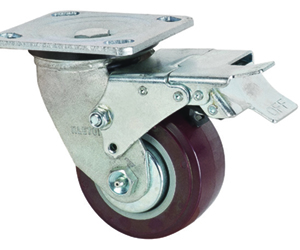
Locks both the wheel and the plate.
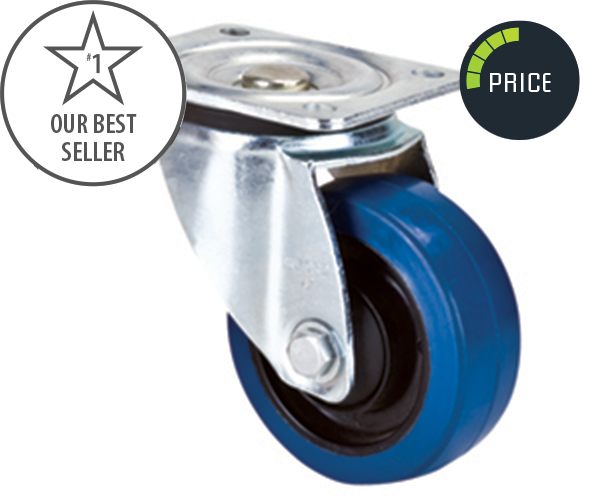
Soft rubber plastic core.
Holes instead of slots on the top plate.
Ball Bearings.
*3" has roller bearings.
Capacity: 285 - 400 lbs.
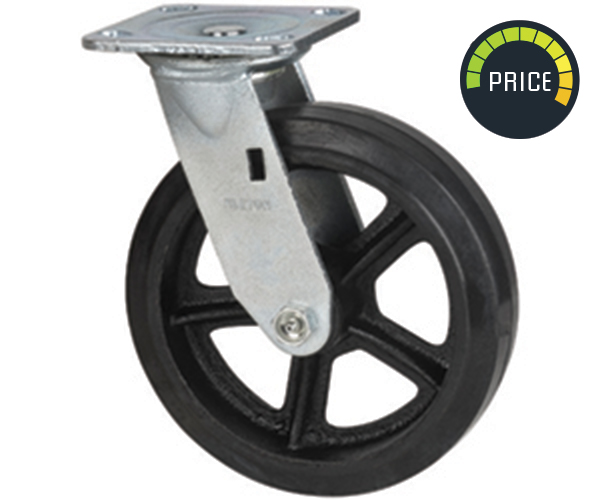
Soft rubber.
Iron core instead of plastic.
Roller bearings.
Rolls over debris + uneven surfaces.
Capacity: 400 - 600 lbs.
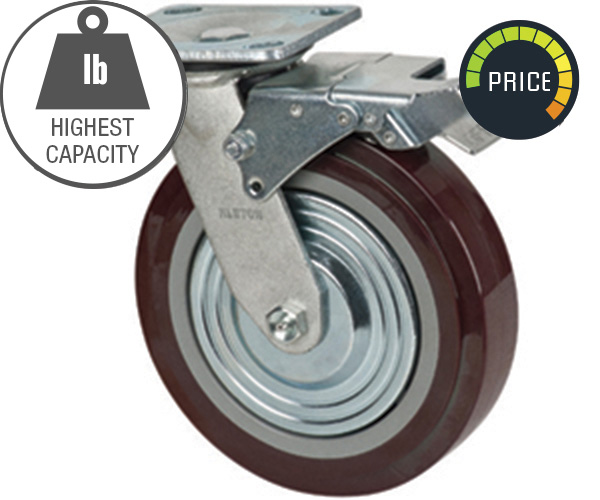
Hard plastic wheel with a plastic core.
Ball bearing.
Typically used in commercial industrial applications.
Capacity: 230 - 1000 lbs.
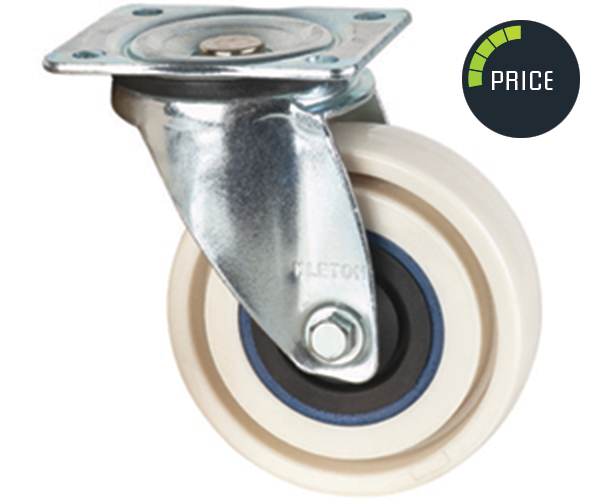
Nylon on rubber.
Holes instead of slots on the top plate.
Provides some shock absorption.
Use on softer surfaces.
Capacity 440 lbs.
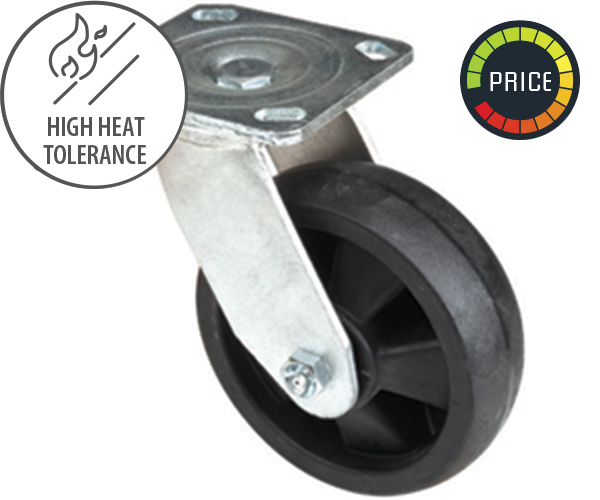
High heat tolerance.
Has protective coating for heat.
Good for use on all sorts of surfaces from wood to cement.
Ball bearings.
Capacity 800 - 850 lbs.
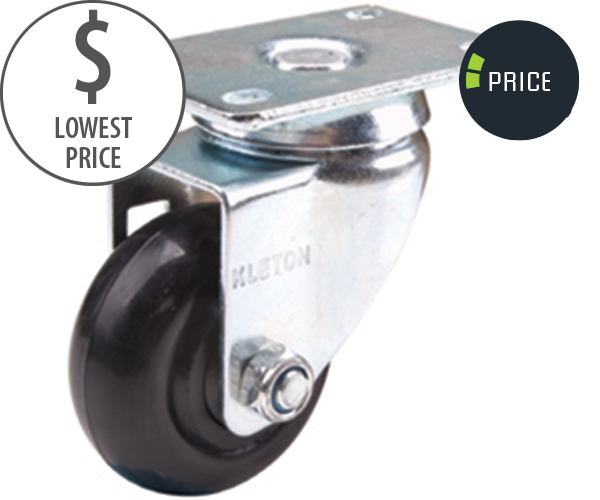
Simple plastic wheel.
Low cost, Ball Bearings.
Lightweight with high impact resistance.
Protects floors and resists heat and chemicals.
Capacity 250 lbs.
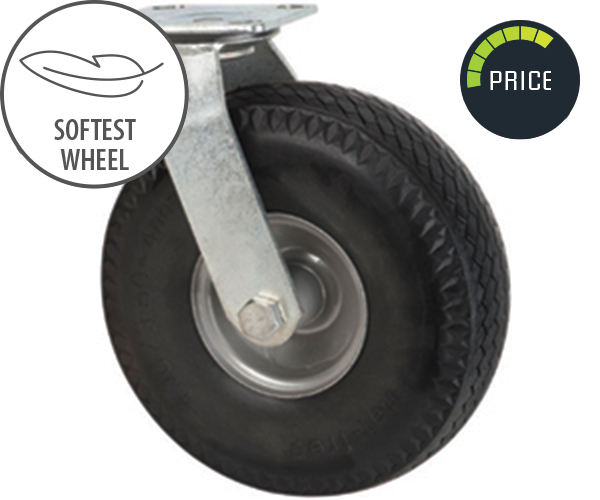
Softest wheel.
Inflated with a pump.
Similar to a bike tire but thicker cushioned ride and lightweight.
Ball Bearings.
Capacity 350 - 400 lbs.
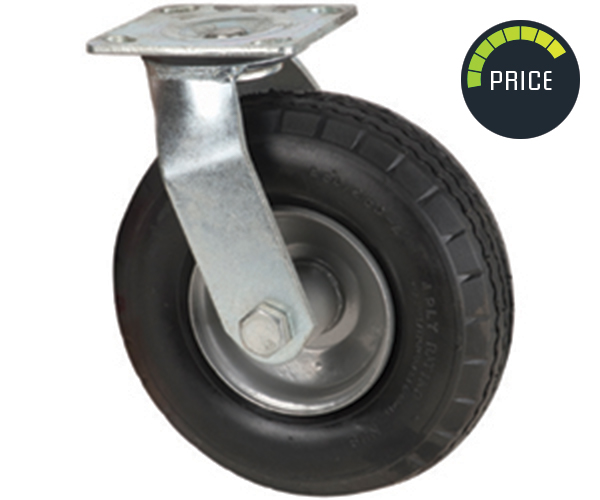
Solid polyurethane wheel never runs flat.
Same feel and weight as the pneumatic caster.
Ball Bearings.
Capacity 275 - 300 lbs.

The calculation for required caster capacity is as follows.
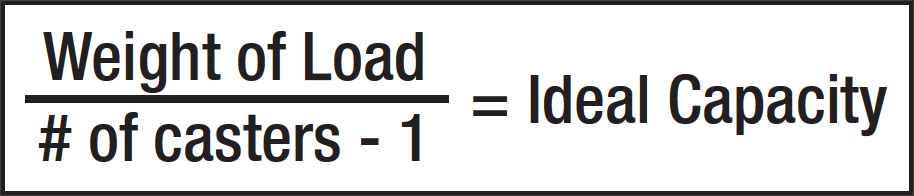
Uneven floors and load distribution may place a heavier burden on one or more casters.

The larger the wheel size, the greater the mobility. The type of bearing selected will also improve mobility and reduce rolling resistance.

Check for rough or uneven surfaces, joints, grates, potholes, oil, grease and solvents or a variety of other chemicals and contaminants. In addition, note any carpeted areas or areas where non-marking qualities are critical.

Check for dust, humidity and temperature extremes.

Noisier. Typically non-marking. Easier to start rolling. Larger capacity.

Quieter. Difficult to roll with heavy load. May leave marks. Good floor protection.

Horizontal plate used to attach a caster to equipment. Plates spread the load over a larger area, increasing capacity of the wheel.

The distance between bolt holes in top plates. On some top plates, this is static; most of ours are slotted allowing for an easier replacement to existing equipment.

The overall diameter of the wheel, affects mobility and swivel radius.

A measurement of one side of the wheel to the other.

A caster's capacity refers to the tested and approved weight a single caster can hold. For safety reasons, advertised capacity is always lower than tested capacity.
Max quantity is 999999999. Your cart item has been updated
Model:
Your Model No.:
Mfr. No.:
Qty.: